What is PLM?
Create and manage all the data you need across every stage of a product’s lifecycle.
PLM explained
PLM (product lifecycle management) is a strategic approach to managing the entire lifecycle of a product, from its initial concept through design, manufacturing, service, and eventual disposal.
PLM integrates people, processes, and data across various stages of product development, ensuring that all stakeholders have access to the most up-to-date information. This holistic approach helps organizations streamline operations, reduce time-to-market, and improve product quality.

Phases of the product lifecycle
1. Innovation and design
2. Product development
3. Simulation and data management
4. Manufacturing and assembly
5. Marketing and sales
6. Servicing
7. Maintenance
8. Dismantling and recycling
Definitions, differences, and overlaps between enterprise systems
“Product” refers to any good, service, or idea created to meet a specific market need or customer demand.
“Lifecycle” refers to the comprehensive sequence of stages a product passes through, including conception, design, development, production, use, maintenance, and end-of-life.
“Management” refers to the processes and practices that ensure accurate, secure, and accessible product data—covering collection, organization, and maintenance across internal and external stakeholders.
Isn’t PLM just product data management?
PDM (product data management) focuses primarily on storing and organizing design and engineering data, often serving as the foundation for PLM. PLM extends beyond PDM by adding a managing and process-oriented layer on top of the data, incorporating functions such as:
- Change management (tracking revisions and history)
- Project management (defining timelines and stages)
- Configuration management (maintaining the definition of product versions)
- Supply and document management
- Business process management (defining how and when tasks are executed)
For a more detailed comparison of PDM and PLM, please refer to our article, “PDM vs. PLM: Which is Right for Your Business?”
System integrations
A PLM system combines software, hardware, and defined processes into a unified framework. It eliminates “knowledge silos” between disciplines – such as mechanical, electrical, and industrial design – by enabling them to work from the same data source. Without this integration, teams face data conversion issues, lost version histories, and slower development cycles.
Modern PLM platforms like 3DEXPERIENCE use a single, seamless data model that merges PDM and PLM within one environment. Unlike traditional systems that maintain separate layers for data storage and lifecycle control, the unified model ensures all teams operate on shared, real-time information across design, visualization, and simulation.
Related enterprise systems
PLM is one of several core management systems within a company’s digital ecosystem, often referred to as the “holy trinity” of enterprise management:
- PLM (product lifecycle management).
- ERP (enterprise resource planning) handles financial and resource data.
- MES (manufacturing execution system) oversee production processes.
NB Some organizations also include CRM (customer relationship management) as a related system that connects product data with customer insights.
Design and development

Simulation and data management

Manufacturing and assembly
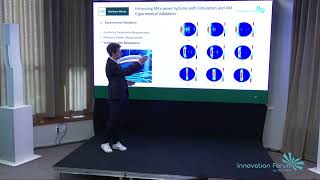
Marketing and sales
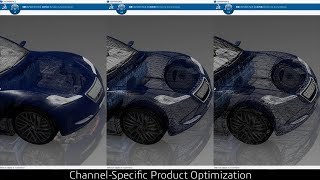
Servicing and maintenance
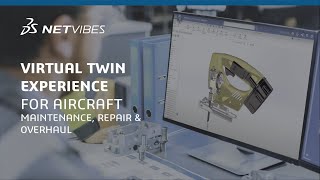
Dismantling and recycling

What are the benefits of PLM?
Shorten time-to-market
Enable faster product development by centralizing data and removing inefficiencies such as redundant data entry or manual file transfers between departments.
Improve product quality
Ensure higher product quality by maintaining strict control over design specifications, manufacturing processes, and compliance requirements. This reduces errors during production and helps avoid costly recalls or rework.
Enhance collaboration
Encourage better collaboration by breaking down silos between departments such as engineering, marketing, and manufacturing. Teams can work together more effectively using shared data platforms that provide real-time updates on project progress.
Reduce costs
Control development costs by reusing designs, materials, and components across multiple products or iterations, and lower operational costs by improving efficiency in manufacturing processes.
Ensure regulatory compliance
Meet industry-specific regulatory requirements by integrating compliance management into the product development process. This reduces the risk of non-compliance and ensures that products meet safety and quality standards from the outset.
Aid decision-making
Provide real-time insights into the product lifecycle, enabling stakeholders to make better informed decisions about product design, resource allocation, and market opportunities, ultimately improving strategic outcomes.
Establish traceability
Offer complete traceability throughout the product lifecycle, from initial design changes to reuse, recycling, or repurposing. This historical record is essential for auditing, compliance, and understanding the evolution of a product over time.
Manage sustainability
Support sustainability initiatives by tracking materials, energy consumption, waste management, and adherence to environmental regulations. This helps organizations reduce their environmental impact while aligning with sustainability goals.
Arrange a consultation
Our team of experts is ready to work with you to understand your business needs and propose a personalized solution.
What's the best way to get started with PLM in your organization?
Implementing a PLM system and strategy is a transformative process that requires careful planning and collaboration. Keep reading to discover our recommended approach to PLM, or reach out to your local TECHNIA representative for a consultation.
Before diving into the technicalities of PLM, it’s essential to clearly define what you want to achieve with the system. Engage key stakeholders from all departments—engineering, manufacturing, sales, and IT—to identify inefficiencies in your current processes and establish measurable goals. Ask questions like:
- What specific challenges are we trying to solve with PLM?
- How will we measure the success of the implementation?
- What long-term benefits do we expect?
By setting clear objectives from the start, you’ll ensure that everyone is aligned and that the implementation stays focused on delivering tangible results.
Choosing the right PLM platform and vendor is crucial for a successful implementation. The solution should fit your company’s size, industry, and specific needs while offering scalability and flexibility for future growth. Modern PLM platforms often provide cloud-based solutions that integrate seamlessly with existing systems like ERP or SCM.
Equally important is selecting a vendor who offers more than just software. A strong PLM partner provides strategic guidance, industry expertise, and ongoing support. Look for a vendor with experience in your industry and a proven track record of successful implementations.
Key questions to ask when selecting your PLM partner and solution:
- Can the system grow with your business?
- Does it adapt to future business needs?
- How well does it work with your existing tools?
- Does your PLM partner understand your industry and challenges?
- Will they provide ongoing assistance beyond implementation?
By choosing the right solution and vendor, you ensure a technically robust system backed by expert support for long-term success.
One of the most significant challenges in implementing PLM is managing organizational change. Resistance from employees can slow down or derail the project if not handled effectively. To mitigate this risk, involve all relevant stakeholders early in the process and communicate the benefits of PLM clearly. Show how it will improve their day-to-day work by reducing redundant tasks and improving data accuracy.
Best practices for change management include:
- Conducting workshops or training sessions to familiarize staff with new workflows.
- Creating a communication plan to keep everyone informed throughout the implementation.
- Appointing internal champions who can advocate for PLM adoption within their teams.
Once you’ve selected your PLM platform and engaged your teams, it’s time to map out your current business processes and identify which ones will be managed by the new system. This phase involves gathering detailed requirements from each department and prioritizing them based on business impact.
Work closely with your PLM partner during this stage to ensure that all necessary features are included in the system configuration. A clear project plan should be developed at this point, outlining timelines, responsibilities, and KPIs (key performance indicators) for tracking progress.
With your requirements defined and processes mapped out, you can begin rolling out the new PLM system. A phased rollout approach is often recommended to minimize disruption to daily operations. Start by implementing core functionalities with a smaller team or department before expanding across the entire organization.
During this phase:
- Ensure that hardware and software infrastructure is ready.
- Provide comprehensive training for all users.
- Monitor performance closely to identify any issues early on.
Communication remains critical during implementation, both internally (to employees) and externally (to partners or suppliers). Make sure everyone understands their role in using the new system effectively.
Once your PLM system is live, optimization doesn’t stop there. Regularly review how well it’s meeting your initial goals and look for opportunities to improve efficiency further. This could involve fine-tuning workflows, adding new features, or expanding usage across additional departments.
A constant exchange of feedback between teams will help uncover areas where further improvements can be made. Additionally, as your business evolves or grows, ensure that your PLM system is updated accordingly.
For long-term success, it’s essential to raise awareness about how PLM benefits both individual employees and the company as a whole. Encourage a culture of continuous learning by offering ongoing training sessions and creating internal resources that highlight best practices.
Management support is crucial here. Leaders should actively promote the advantages of PLM adoption and ensure that all departments are on board with using the system consistently.
A successful PLM implementation depends on how well your team uses the system. Comprehensive, role-specific training is essential to fully capitalize on PLM capabilities. Start by offering tailored sessions for designers, engineers, project managers, and key users, using a mix of workshops, online modules, and simulations.
Establish ongoing support through a help desk or dedicated team to assist users as they adapt. Offer continuous learning opportunities, such as refresher courses and feature updates, to maintain engagement. Investing in training empowers employees to maximize PLM value and ensure long-term success.
Seeing is believing
Why not arrange a live, online demonstration with a member of our expert team?


Essential software for PLM

For complex engineering design and assembly modeling.

For robust product data management, business analytics, and decision support.

For optimizing manufacturing processes, improving operational efficiency, and enhancing product quality.

For virtual testing, analyzing, and optimizing product performance.

View our extensive range of software solutions
Need help with PLM product lifecycle management?
Dominik Zinner and team are on-hand to provide tailored guidance and support with a deep knowledge of the full Dassault Systèmes portfolio. Reach out for a free consultation today.

Product Lifecycle Management FAQs
Light My Way is the only dedicated DAS (digital adoption solution) that is expressly developed for use with the 3DEXPERIENCE platform.
There are an incredible number of user roles, functions, and app states within the 3DEXPERIENCE platform and its suite of applications. Users are constantly learning, updating processes and sharing knowledge to keep up with the pace of innovation. So, how can a DAS for Dassault Systemes’ 3DEXPERIENCE be ready to help users out-of-the-box? Well, it would need to be built on years of expert user guidance and best practices. It would need to be intelligent and intuitive enough to understand subtle differences in user roles and application states. And it would need to be versatile enough to have constant updates applied.
Light My Way provides all of this in an instant. Boost your teams’ productivity by minimizing time spent on complex business processes, infrequent tasks and change management activities today. And allow superusers and in-house experts to record essential process changes to start sharing knowledge immediately. Light My Way supports your teams with expert knowledge wherever their cursors point.
And, even as updates roll out, Light My Way keeps users up to speed with the latest best practices. Better yet, build your own custom guidance to ensure optimal efficiency for all of your user roles. Manage and optimize user experiences every step of the way along your digitalization journey. Analyze user engagement, highlight friction points, and support with custom workflows and tutorials.
For a successful PLM implementation, it is important to consider proven PLM methods. A common method is to use simple numbering. The 5- to 7-digit identification enables the unique numbering of up to 10 million items.
Furthermore, it should be ensured that the relevant product data is communicated to the right people at the right time so that added value is created in every process with minimal additional effort.
Applying existing out-of-the-box processes based on industry standards and proven best practices to existing business processes has also become established.
The introduction of PLM in your company affects many departments and employees. Numerous processes and workflows must be reviewed and modified.
A good PLM consultancy ensures that all aspects of the objectives and the company-specific initial situation are considered to enable individually optimized support.
Whether PLM and document management, CAD, or ERP – all related systems and solutions are included. Specific PLM strategies are developed in consultation with the client.
Because PLM consultants think in terms of user interface, functionality, and customization, they find the best solution for each company. PLM consulting is also comprehensive – from planning and implementation to operation of the product lifecycle management solution.
Choose an experienced partner who has already completed numerous PLM implementation projects in your industry. A partner who understands your process landscape will continue to work with you in a long-term partnership to shape your digitalization.
Below, you’ll find an overview of the various features and distinguishing characteristics that will help you make the right choice for you.
Tenders for PLM software
If a company plans to tender for a PLM solution, the process is divided into various tender phases. These phases begin with the needs analysis, followed by tender preparation, invitation to submit proposals, bid evaluation, vendor selection, contract negotiations, the implementation phase, and subsequent training and support.
There are several points that companies should consider before selecting a PLM or PDM provider.
Selecting a PLM provider
Basically, the different PLM providers can be differentiated by the following characteristics:
- Is there an industry focus?
- Is it a PLM in the cloud or an on-premise solution?
- Does the PLM software work independently of specific CAD systems, or is it tied to systems from selected manufacturers?
- What is the software’s history? Does this dictate any key functional features?
Selection criteria for a PLM service provider
When choosing a PLM provider, it is important that you not only keep an eye on current requirements but also consider how future-proof this provider is and how future-proof your company can be with the selected solution.
You should look at the following criteria in detail:
References and experience from the industry
Check whether your preferred provider has a track record of PLM projects in your industry. This existing expertise can be leveraged when it comes to adapting the systems to your industry and processes.
Billing and pricing models
On-premise or cloud? Every company has its own reasons for choosing PLM cloud or on-premise. Many PLM providers have switched to software as a service, where hardware, operation, and maintenance costs are covered by a recurring rental fee in a subscription model.
Openness and ability to integrate
It must be ensured that the PLM system works smoothly with your existing authoring tools, your ERP, CRM, or other software, and is also expandable as required.
User-friendliness
A system is only as good as its users. Simple and intuitive operation is a key factor in achieving high user acceptance. Furthermore, ease of use can increase performance and reduce administrative effort.
Support services
Your provider should be there for you even after the PLM implementation. Check what level of support you will receive. Will you be assigned a central contact person? What are the availability hours? What is the quality of technical support? How long does it take to process inquiries?
Updates and upgrades
Depending on the billing model you choose, updates and upgrades are handled differently. If you choose the cloud model, all costs for changes and updates are generally included in the software.
With the on-premises model, costly and time-consuming changes can be imposed on your in-house IT department, which must ensure that the new version continues to communicate seamlessly with the internal infrastructure.
Fundamentally, all industries are under pressure to produce products in ever shorter timeframes with greater innovation. So, PLM systems are used in a wide variety of industries.
From a financial perspective, the highest investments and expenditures in PLM are found in the highly specialized automotive and aerospace sectors.
Here you can see an excerpt about the different industries and application areas of the 3DEXPERIENCE platform (PLM system from Dassault Systèmes):
Industrial equipment
- Accelerate the development and delivery of personalized products
- Connecting systems, people, and data to bring together different disciplines to drive innovation
- Using Big Data to increase profitability
- Building sustainable and responsible manufacturing through circular innovations
Learn more about the challenges PLM systems help industrial equipment manufacturers overcome.
High-tech
- Ensuring product performance and compliance through realistic simulations of product use by the customer
- Shorter innovation cycles for new products
- Improving cooperation among business partners
- Reducing errors, rework, and risk
Learn more about the challenges PLM systems help high-tech companies overcome.
Consumer packaged goods
- Shortening time to market thanks to virtual technologies
- Eliminating silo structures that hinder collaboration
- Digitization of internal data to enable better reuse when launching in other markets
Learn more about the challenges PLM systems help CPG companies overcome.
Life sciences
- Holistic approach to product development
- High-quality, personalized products through predictive and adaptive manufacturing approach
- All information in one place to make the best decisions at the right time.
- Full control over all products, parts, reagents, manufacturing and regulatory compliance
- Collaboration and integration with patients, physicians, suppliers, and partners
Learn more about the challenges PLM systems help life sciences organizations overcome.
The PLM approach originated in the automotive industry. Companies of all sizes and across all industries have now recognized the benefits of holistic, enterprise-wide data and process management.
Today, PLM is successfully used by startups and medium-sized businesses as well as global corporations. Only with networked teams, automated processes, and a digitized value chain can innovations be implemented quickly.
The implementation of a PLM system is a groundbreaking project that has long-term, cross-company implications.
The following basic criteria should be considered when selecting a PLM system:
PLM functionality
Does the PLM system map your business processes? Is there a PLM industry solution that best covers your business processes out of the box, without extensive customization? How flexible and scalable is the solution?
PLM future viability
Your PLM system should be able to grow and evolve with your company. The modularity and openness of the PLM system ensure your future competitiveness.
Choose an established software vendor that guarantees continued system development and regular updates. Cloud-enabled PLM systems offer greater flexibility, agility, and easier scalability.
PLM partner
The selected provider should demonstrate strong expertise and credentials not only in the system itself, but also in your industry. They must also guarantee sufficient capacity for PLM implementation.
The number of tasks/functions varies from system to system. These are the basic tasks of a PLM system:
Data management (CAx, CAD, CAE, PDM)
A PLM system manages various types of technical data from various authoring systems. Release and version management are standard features.
BOM management
Managing bills of materials is one of the most important PLM functions. The solution must not only be able to create and manage eBOMs (engineering bills of materials), mBOMs (manufacturing bills of materials), and sBOMs (service bills of materials), but also synchronize them with each other if necessary.
Change management
Change-relevant information flows automatically into the change process/change management, is available to all areas, and ensures complete traceability.
Configuration management
The creation of product variants is strictly documented in a PLM system to ensure a complete change history and version management.
Quality management
Integrated QM ensures compliance with all guidelines and standards, prevents errors, and ensures the production of high-quality products.
A PLM platform ensures close networking of users, information, and processes and effective collaboration and communication between company divisions and locations.
A PLM platform is never a rigid entity; it evolves with business and market requirements. Certain functions and/or applications can be easily added. The PLM platform’s cloud capability is a key prerequisite for future flexibility and agility.
A PLM platform not only facilitates internal collaboration, but certain features also allow for easy integration with your external partners and suppliers.
Integrated enterprise change management, for example, allows your suppliers to be involved early in the change process, enabling faster response.
A PLM platform is a suite of solutions for various business areas – from design and production to sales and marketing. It provides each area with its own specific tools.
The strength of a platform lies not only in the number of available tools but also in its connectivity. The same, up-to-date data is used across all departments and serves as the basis for decision-making.
Agile PLM refers to product changes being made iteratively. Similar to software development, production processes are no longer rigidly planned from start (idea or design phase) to finish (sale and disposal).
Instead, the focus is on shorter and more flexible development cycles that allow for rapid response to new circumstances.
These could include, for example, customer change requests, new quality specifications due to new guidelines, or disrupted supply chains that require the use of alternative materials.
Agile PLM is clearly superior to traditional PLM, the ‘waterfall method.’ In the traditional development method, all designs are recorded and documented before construction begins, and customer feedback is rarely prioritized.
As a result, production processes typically continue even though the underlying conditions have changed. This then leads to defective production and significant cost increases that would be avoidable in the agile model.
Agile PLM is possible with a PLM platform that connects all product development processes.
This central platform, accessible to all stakeholders at all times, ensures that design errors are avoided and changes are incorporated as soon as they occur. This extends product lifecycles and helps maintain competitiveness in the marketplace.