Advanced Simulation and Collaborative Solutions for Resilient Structures
About ESS (European Spallation Source)
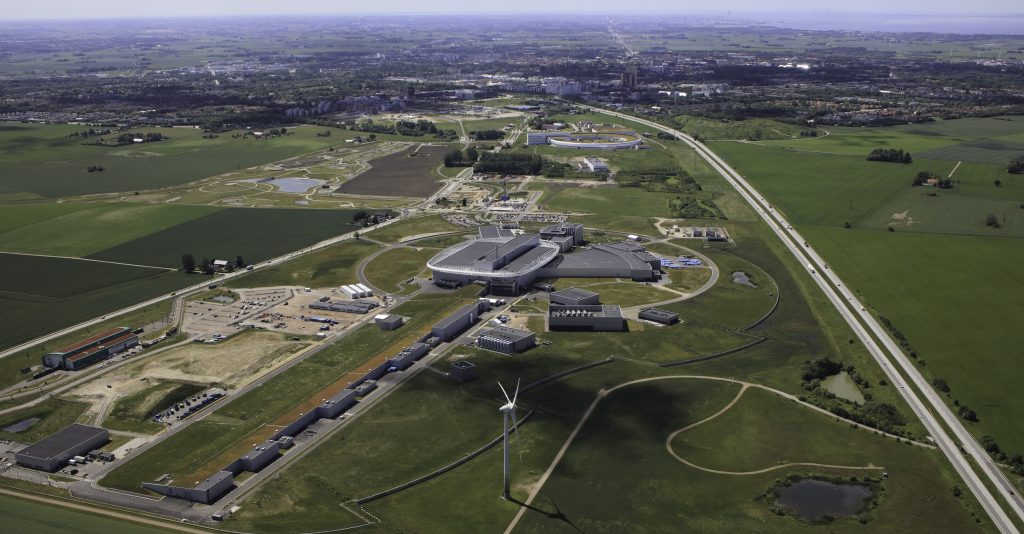
ESS is a groundbreaking scientific facility currently under construction in Lund, Sweden, representing a collaborative effort among 13 European nations. As one of the largest and most ambitious science and technology infrastructure projects in the world today, ESS is poised to revolutionize materials research, life sciences, and engineering innovation.
At its core, ESS will harness the power of neutrons to enable scientists to peer deep into the atomic structure of materials, uncovering not only where atoms are located but also how they behave. This unprecedented capability will drive breakthroughs across a wide range of fields; from designing next-generation batteries and sustainable plastics to developing stronger, more resilient engineering materials. In the life sciences, ESS will empower researchers to create more effective medicines and accelerate the development of life-saving vaccines.
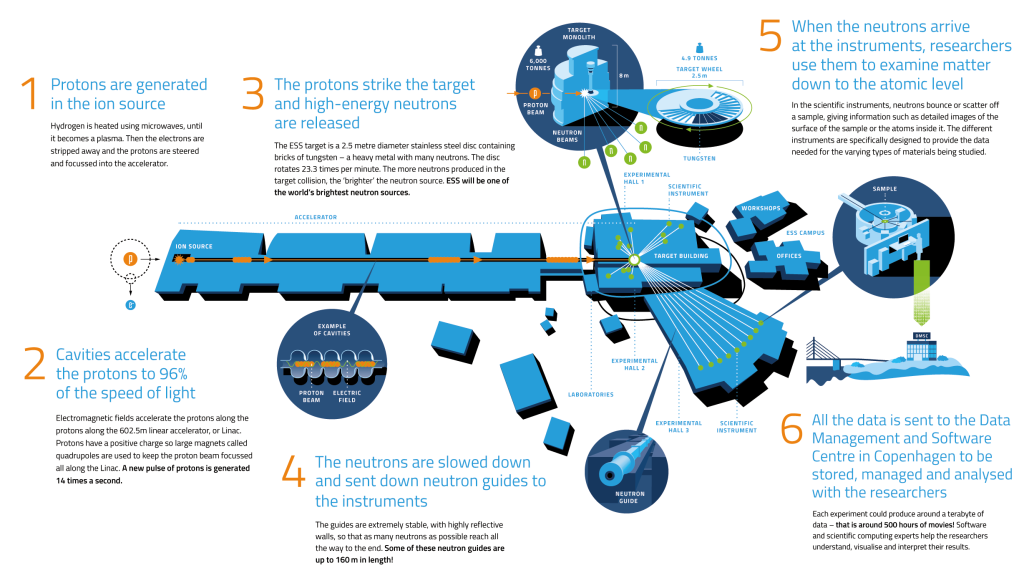
The facility itself is a marvel of modern engineering, featuring the world’s most powerful linear proton accelerator, a cutting-edge helium-cooled tungsten target wheel, 15 advanced neutron instruments, a suite of specialized laboratories, and a state-of-the-art supercomputing center for data management and software development. Yet, ESS is more than just the sum of its remarkable components, it represents a bold, forward-thinking vision; a brand-new organization being built from the ground up to push the boundaries of scientific discovery.
A journey to engineering excellence
TECHNIA advanced simulation services team was commissioned as a third-party reviewer for a large-scale project involving the design and construction of large-scale structures, including main buildings and piled foundations at the target station and the radioactive waste treatment facility at ESS in order to ensure radiation safety. The project included various assignments with the main objective to contribute to robust design and construction of the target buildings. Examples of the assignments are listed below:
- Preliminary design review: Early in the project, ESS partnered with TECHNIA to review the preliminary design of the target building’s foundation structure. Through this collaboration, many critical decisions were made based on the review work and comparative simulation models.
- Critical design review: A key aspect of the commission involved performing a detailed review of design documents, including calculations, construction drawings, and simulation models. This review played a vital role in ensuring compliance with both leading codes and standards, as well as the requirements of internal stakeholders.
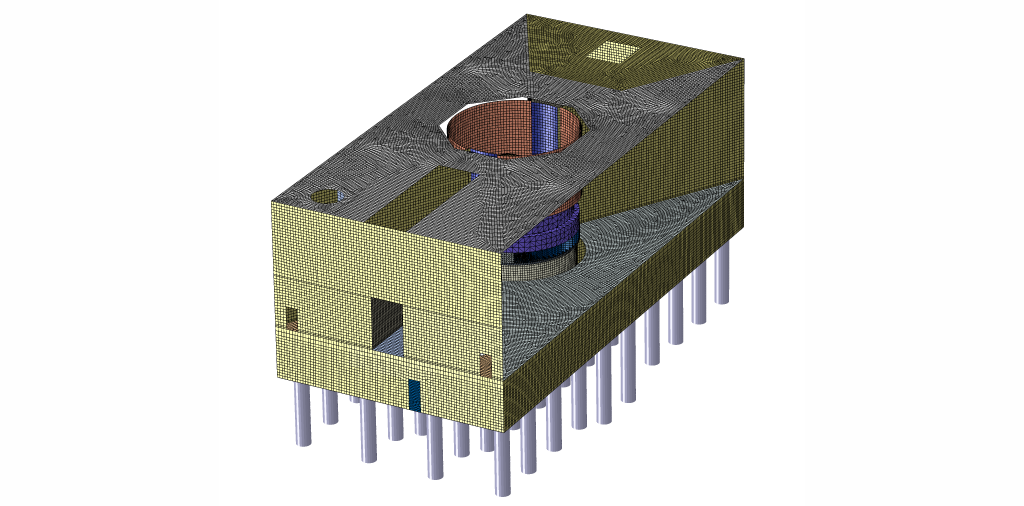
- 3D models: As part of the review, 3D FEA models of the building structures were developed to perform comparative analyses of critical load cases and validate the design. These models were also used to assess structural capacity under extreme conditions, including APC (airplane crashes), seismic loads, and antagonistic threats.
- Owner’s engineer: TECHNIA was appointed as the owner’s engineer role for critical building structures. This role encompassed the entire process, from reviewing the preliminary design to coordinating designs and providing guidance on construction issues on site. It also involved close collaboration with design firms such as COWI, SWECO, and Buro Happold, ensuring a cohesive and optimized design process.
- Seismic ISRS: TECHNIA generated seismic ISRS (in-structure response spectra) for approximately 10,000 positions to support the design of safety systems. To streamline data management, TECHNIA created an ISRS Viewer, enabling efficient interpretation and utilization of complex ISRS outputs.
Example of finite element analysis application – Generation of seismic ISRS catalogue
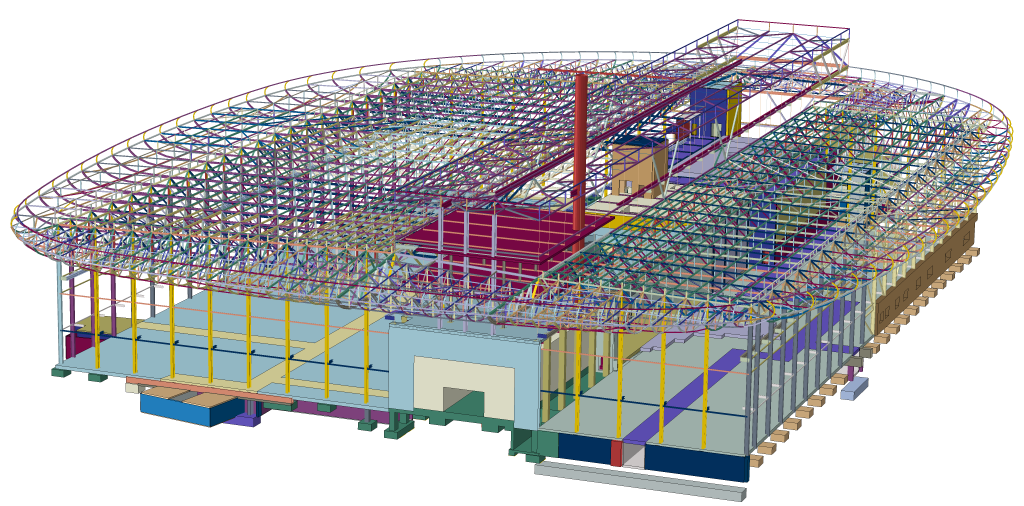
Using the individual FEA models of the target structures developed during the review process, a global model was assembled to perform seismic analyses. This model provided a detailed representation of the target structures, the adjacent experimental halls, and the complex steel roof framework. A particularly challenging aspect of the modeling was accurately representing the piled foundation to ensure correct soil-structure dynamic behavior, capturing the interaction between the steel-core or concrete piles and the surrounding clay soil.
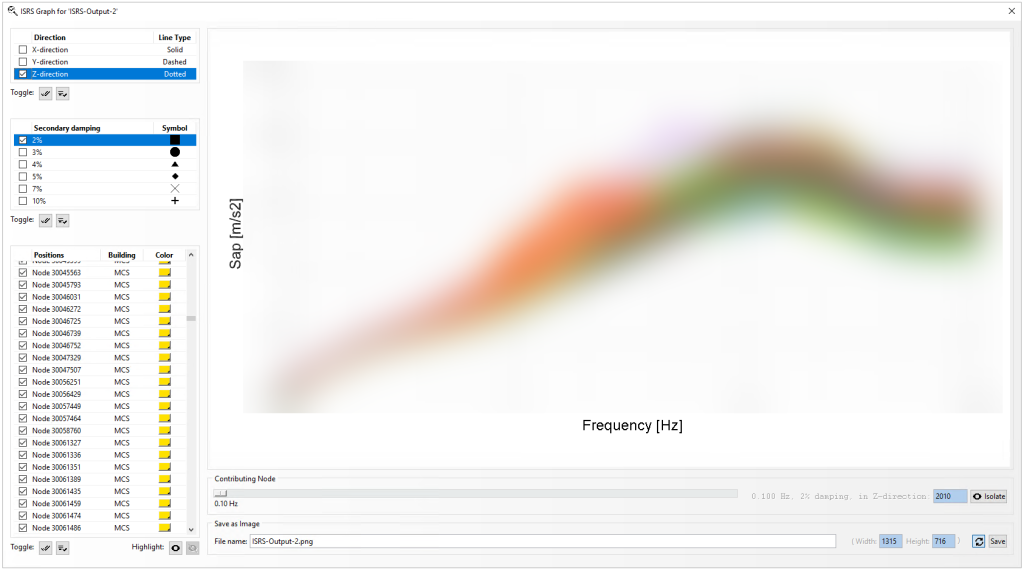
ISRS was generated in approximately 10,000 positions and to efficiently manage this vast number of output data, an ISRS Viewer was developed. With this tool it is possible to choose a specific room, wall, floor, or position coordinate and receive a seismic design response spectrum valid for the chosen structure to be used for subsequent seismic design of safety system components.
Conclusion
The assignment carried out by the TECHNIA advanced simulation team at ESS contributed to a robust design and construction of the target buildings and the radioactive waste treatment facility, ensuring compliance with both codes and standards as well as internal stakeholder requirements. This was made possible by TECHNIA’s extensive knowledge and over 25 years of experience in the nuclear industry.
The use of 3D FEA models played a central role in the review process and in assessing structural capacity under extreme conditions, including APC (airplane crashes), seismic loads, and hostile threats.
TECHNIA’s nuclear industry experience, particularly with seismic challenges, provided a critical foundation for addressing the complex task of generating ISRS in the safety-related structures of ESS civil facilities. This expertise also supported the development of the ISRS Viewer tool, enabling efficient management of large datasets and seismic responses across 10,000 individual positions. The tool serves as a basis for calculating design ISRS for specific structures or positions, facilitating subsequent seismic verification of components.
Essential software and services for simulating resilient structures
Engineering simulation services
Achieve superior performance with engineering simulation services. Predict and analyze product designs under various stresses and dynamic effects.

For the structural analysis and design of bridges and civil structures.

View our extensive range of software solutions
Let's talk
Our simulation team are on-hand to provide tailored guidance and support with a deep knowledge of the full SIMULIA portfolio. Reach out to talk to an expert today.
Want to receive more content like this?
Our monthly thought leadership newsletter delivers detailed digital engineering knowledge directly to your inbox. Our experts provide their insights on the latest trends and innovations across disciplines such as:
- Advanced simulation
- Digital engineering
- Product lifecycle management
- Virtual twin


