Simulation and Mechatronics in Automotive Development

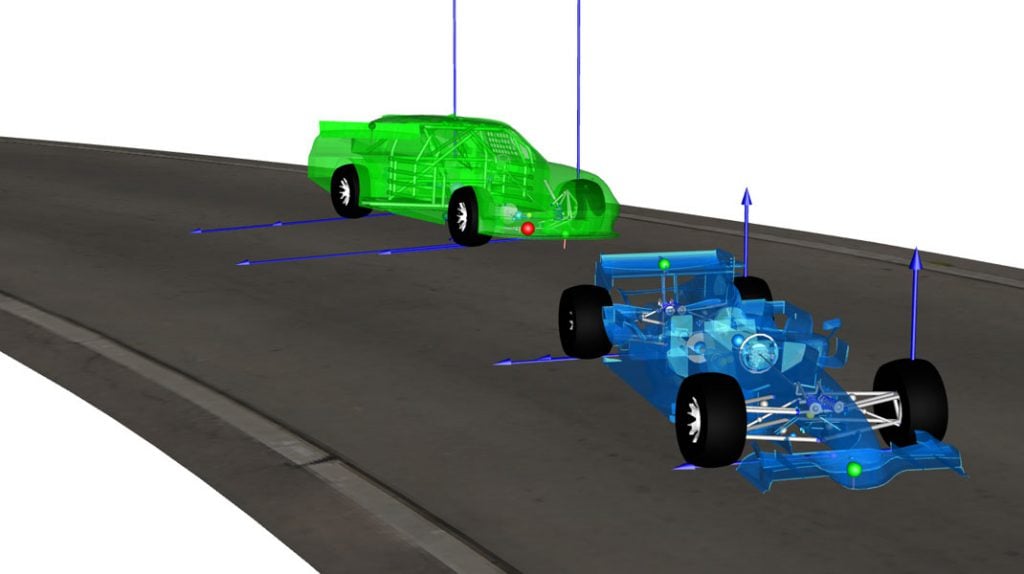
Table of contents
Development processes need to be able to capture and understand all the permutations of each design change or choice, which cannot be easily discretised into singular studies, whether physical or virtual. Systemic interactions, and the ramifications at local and whole vehicle level, need to be understood.
Consider a modern automotive innovation: active aerodynamics. It is inherently multi-physics; control software triggers electrical automation of hydraulic systems, to change the aerodynamic profile of a component, which then impacts the thermal performance of the vehicle, as well as energy efficiency and the ultimate handling balance. Looking at one element of this system in isolation will never lead to a robust understanding of the full system dynamics.
Simulation; what is it?
Simulations of various kinds have long been an established part of engineering process to provide more detail and understanding of complex phenomena. Be it FEA (finite element analysis), CFD (computational fluid dynamics) or MBD (multibody dynamics), all engineers are familiar with the concept of CAE (computer-aided engineering). Traditionally, CAE has covered the targeted application of specialist techniques. Over the past decade however, the holistic term simulation has developed, covering modeling of the vehicle as a combined system. So, what does the term simulation mean in the modern context, and how is it revolutionizing the way vehicles are being developed and built in the present day?
To really grapple with simulation as a concept, we first must consider what it is. At heart, it is describing the physical world in numerical terms, enabling the recreation of results from real world testing. Immediately, the dividend of repeatability and repetition can be grasped. But moving beyond that, the real benefit of full vehicle simulation is it enables engineers to ask, and answer, “what if” questions quickly and easily with models detailed enough to be predictive. Questions which would otherwise be impossible, or impractical, to answer.

Modern vehicles are expected to excel in all and every condition. Traditional engineering methods struggle to cope with such a disparate variety of conditions.
In the 20th century, answering such existential questions to further understanding required decades of research to develop parametric analytical equations capable of providing an answer to “what if”, when a single parameter is changed. Even then, such analytical approaches are only of limited use in predicative studies, able to answer only the broadest of questions. Therefore, unsuitable to guide modern design decisions.
If the origins of simulation tools are considered, then the judgement of them as tools to understand the unknown makes perfect sense. Motorsport, such as F1 or NASCAR, are often cited as roots of complete vehicle simulation packages, as is the case of VeSyMA from Claytex. Such tools developed out of motorsport engineers needing to understand a rapidly changing and very complex collection of technological details and physical circumstances. All whilst physical testing options were being simultaneously reduced.
Utilizing the acausal Dymola simulation environment, complete vehicle simulation with VeSyMA provides an innovation over a traditional targeted CAE approach. Each physical or software component the vehicle is built from is modelled from first physics principles and combined into a full vehicle model. These simulation models therefore directly resemble the actual system they are simulating at an intrinsic physical level. Such an approach means if component models are validated correctly, then they can be inserted into full vehicle simulations and be used for predictive studies with confidence.
Evolving beyond a niche
As great as those benefits sound, the jump between simulation being a great idea in theory and a practical tool is quite a large one. F1 and NASCAR teams are minute compared to OEMs and Tier 1 suppliers. Regulatory oversight of final product and product development is also vastly reduced, as are the financial constraints.
Motorsport has long been considered the laboratory of the road. Now, advancements come in the form of methodologies rather than physical components.
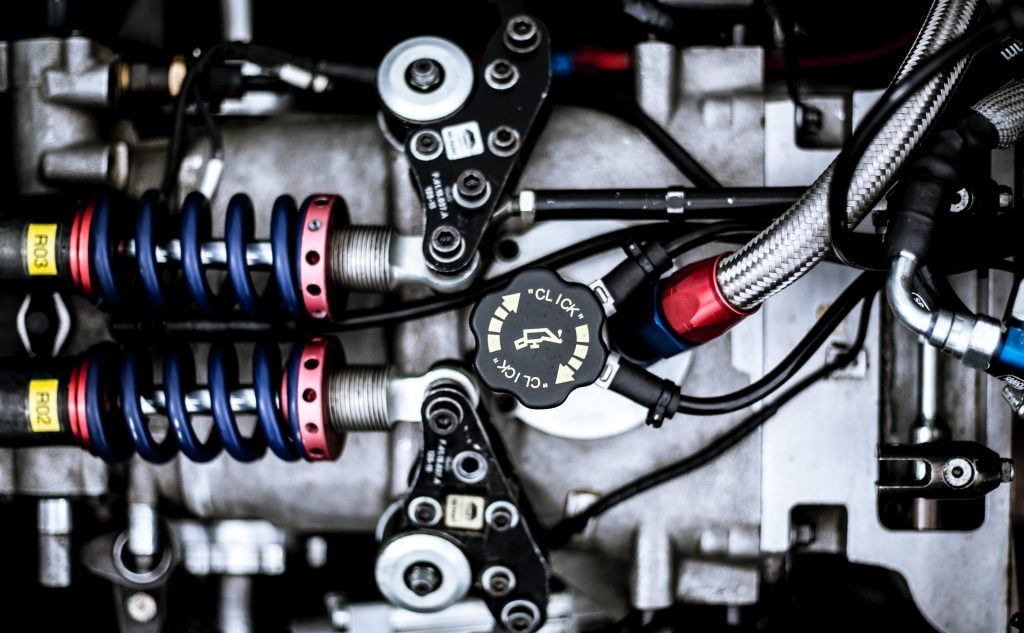
Motorsport has long been considered the laboratory of the road. Now, advancements come in the form of methodologies rather than physical components.
But the reality is that simulation is an inherently flexible tool, adaptable for your specific needs. Not all simulation is the same, or for the same purpose. For instance, in motorsport, you would not use the most detailed fully compliant vehicle model for computing 10,000 strategy permutations the night before a race. Similarly, simulation for automotive applications can be adapted to specific roles within the existing development process, delivering benefits without needing to reorganise the existing deployment of labour.
Flexibility of simulation can be thought of as comprising of two opposite poles. At the one end, are simple, easy to parameterise, not overly detailed models; at the other are the most complex models, with all the detail possible included. All permutations exist between these two poles, with the detail level scaled to the specific function or job required. What provides the efficiency benefit is that both those poles are realised in the same package, sharing the same inherent architecture.
Rather than dealing with multiple packages or maintaining different legacy tools, VeSyMA can provide a core singular backbone of a simulation strategy, underpinning all aspects of vehicle system engineering. Detailed data from subject specific detail packages, such as FEA or CFD can be integrated into the core simulation package of VeSyMA. This then enables highly complex interactions between components to be modelled.
Have confidence in answering “What if?”
The effect of a design change, on say a cabin door insert can be understood in all aspects desired; impact of mass change on vibration response when driving over rough roads, impact of mass change on thermal performance of the cabin in various weather conditions, impact of mass change on vehicle handling, impact of mass and heating/cooling changes on vehicle range. All aspects which either would take painstaking time to run through various specialist simulation packages or require physical prototyping and testing.
Whole ranges of design specifications and permutations can be simulated at the push of a button, enabling the engineer to see the ramifications of design changes at a vastly quicker rate than with traditional targeted simulation tools. Individual component bench test simulations can be conducted alongside full vehicle testing. The unknown can be rapidly mapped by considering an extremely large number of permutations quickly.
Existing structures need updating for modern vehicles
First, we must understand the typical automotive OEM workflow. Following a waterfall-type development structure, work is often conducted in what can be considered a V-Model. Starting at a high level, requirements are decided at a corporate level about the capabilities the vehicle will have. Moving downwards, concepts can be decided upon to meet these targets, which influence device and component selection. With component types selected detailed engineering and design work can be done to ensure the components meet requirements capable of ensuring the total vehicle achieves the corporate level targets.
At this detailed engineering level, work is traditionally grouped and conducted in modules of similar component groups, to promote the evolution of designs within the actual context of their end deployment. Testing processes emerge at this level, moving upwards in a mirror of the design chain. Components are tested individually before being incorporated into subassembly verification processes, eventually being incorporated into full vehicle testing, either in test “bucks” or fully fledged pre-production prototypes. Results and data from these testing processes is then fed back into the design side of the V, resulting in a cyclical, iterative process. Such a process is effective when vehicle components can be organised into neat subassembly groups.
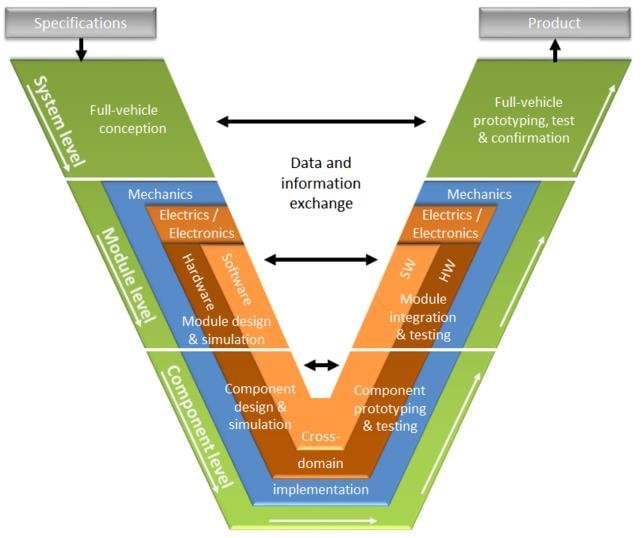
Figure 1: The typical automotive V-model of development. Image: Mario Hirz
As we know, this is not the case with a modern vehicle. Electricals/Electronics (E/E) components link mechatronic systems with the virtual world of software development. Module technologies therefore now mature at different rates, placing a significant bottleneck on total vehicle development as higher-level testing is impacted and curtailed by immature technology. Ultimately, either the final vehicle product is delivered under target spec, or the development lead time is excessively long, leading to late delivery or overabsorption of development resources. Neither outcome represents a positive technical or business result. Total vehicle simulation packages, such as VeSyMA, are precisely the solution required for this conundrum.
We’ve seen these issues before
VeSyMA was born out of simulation tools developed to enable motorsport engineers, in series such as F1 or NASCAR, overcome the inability to physically test complete or partially complete vehicles. By nature, racing cars are highly integrated designs, so reducing the ability to physically test severely curtailed teams’ ability to design competitive cars. As resource allocation to development is much freer in motorsport, teams were throwing ever more unsustainable quantities of money at testing to account for every variable and permutation on their cars. Strict limitations on testing were driven by regulation to reduce money spent on testing. They had to find a way to identify issues normally discovered during the physical testing of old and remedy in the design process.
Figure 2: Animation view of Formula 1 and NASCAR race cars
OEMs now face similar issues. Road vehicle designs are ever more integrated and complex requiring substantially more testing to account for all the variables; more testing than is feasible or practical.
Typically, in motorsport, a core simulation group would be responsible for the implementation and upkeep of simulation libraries and models. Taking advantage of Dymola’s native support for the FMI standard (functional mockup interface) and code export options, models can be easily distributed to internal customers. Often, these will be wrapped in a proprietary computer programme, designed to interface with a company’s design and data management systems.
Deployment of simulation models in this fashion enables simulation to be effectively democratized as a tool, in the hands of design experts, who can then use it efficiently to aid their design processes. Such design experts do not need to be Dymola users or simulation experts themselves. VeSyMA as a simulation suite has been designed specifically to promote model re-use and collaboration through component and vehicle templates usage, with the express intent to be an easily distributable package capable of democratization from a central core to a wide collaborative audience.
VeSyMA can improve design
Starting near the top of the vehicle development cycle, VeSyMA library-based vehicle drive-cycle simulations can be used to probe and understand the fundamental trade-offs involved with vehicle conceptual design. Very easily, users can alter broad aspects of the vehicle quickly, using generalised component models to conduct sweeps of simulations to understand the effect of varying one parameter or aspect of a vehicle. As all VeSyMA vehicle models feature a common template system, vehicle type and architecture can be altered swiftly.
Conceptual choices can be interrogated and explored early in the design cycle. Users can directly compare component types back-to-back, re-running the same experiment. Items such as motor or battery type can be understood quickly in the context of the final vehicle, even if the final vehicle specification is fluid or the vehicle specification is incomplete as generalised component models can be configured to their current target specification.
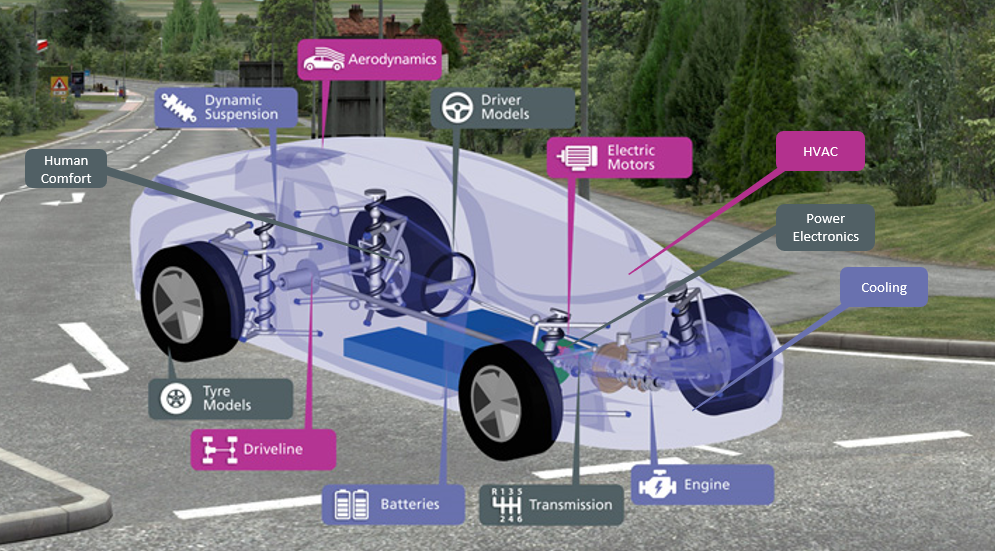
Figure 3: VeSyMA encompasses all aspects of the modern road going vehicle.
Once desired component concept is established, users can evaluate quickly specific component types, by parameterising detailed physical models of specialist components found in the subject specific extension libraries available for VeSyMA. VeSyMA – Suspensions offers vehicle dynamics related models; VeSyMA – Engines provides internal combustion related models; VeSyMA – Powertrain contains power transfer and delivery models. Further libraries available through the wider Dymola portfolio such as the Fuel Cell, Hydrogen and Battery libraries enable users to evaluate any component type they wish without having to invest substantial modelling resources.
Coupled detailed models in Dymola enables contextualised component selection to be more accurate, as all effects on the component from its surrounding are included. Phenomena previously only observable during testing can be understood during initial design.
Test with VeSyMA during detailed design stages
Experiments undertaken virtually to nominate component types and specifications are not limited to full vehicle. Each subject specific library comes with a plethora of individual and subsystem experiments, which can be used to interrogate component performance in isolation, as well as validate that bespoke component models are performing to standard. Modelling efficiency through component reuse in VeSyMA means the same models used in standalone test cases can then be incorporated into full vehicle simulations easily.
VeSyMA based simulations are of intrinsic benefit to the lower levels of the design workflow. As engineers look to investigate and analyse the suitability of designs against performance metrics, component models of their designs can be deployed in a multitude of test cases, developed to test components together in a combined way. Dymola’s support of multi-domain simulation means that studies traditionally discretized across simulation domains, can be combined into the same simulation. This means subsystems combining fluids and thermal components, with full mechanical or electrical and software models, like the active aerodynamics example, can all be tested together. At the design stage.
At both a full vehicle and subsystem level, this enables the contextualized testing of the component to be conducted with all important neighbouring systems. Therefore non-linear, and knock-on effects of component integration and design can be understood from the beginning of detailed design work. Linking design data repositories enables the data used in cross-department simulations to be updated with the designs, enabling engineers to collaboratively develop interconnected systems in a more efficient way compared to traditional V-Model processes.
Final thoughts
The effective upshot of deploying a simulation suite such as VeSyMA is that it enables virtual testing to be incorporated into design processes. Better design choices can be taken earlier, as issues which previously would remain hidden until later in the product development cycle are unearthed and revealed sooner. Not only does this save development time, but it also saves money and testing costs.
Development bottlenecks associated with the traditional V-Model and physical testing are reduced with VeSyMA, as the understanding of all linked aspects, such as the mechanical and software in mechatronic systems, is incorporated into the design process. Such simulation enables components to be tested in context from the beginning removing bottlenecks where one technology is waiting for another to mature to progress to the next stage of development.
Essential software and services for advanced simulation in automotive industries
Dymola
For modeling and simulation of complex, multi-engineering systems.

For advanced vehicle system modeling and simulation.
Engineering simulation services
Achieve superior performance with engineering simulation services. Predict and analyze product designs under various stresses and dynamic effects.

View our extensive range of software solutions
Want to receive more content like this?
Our monthly thought leadership newsletter delivers detailed digital engineering knowledge directly to your inbox. Our experts provide their insights on the latest trends and innovations across disciplines such as:
- Advanced simulation
- Digital engineering
- Product lifecycle management
- Virtual twin


